

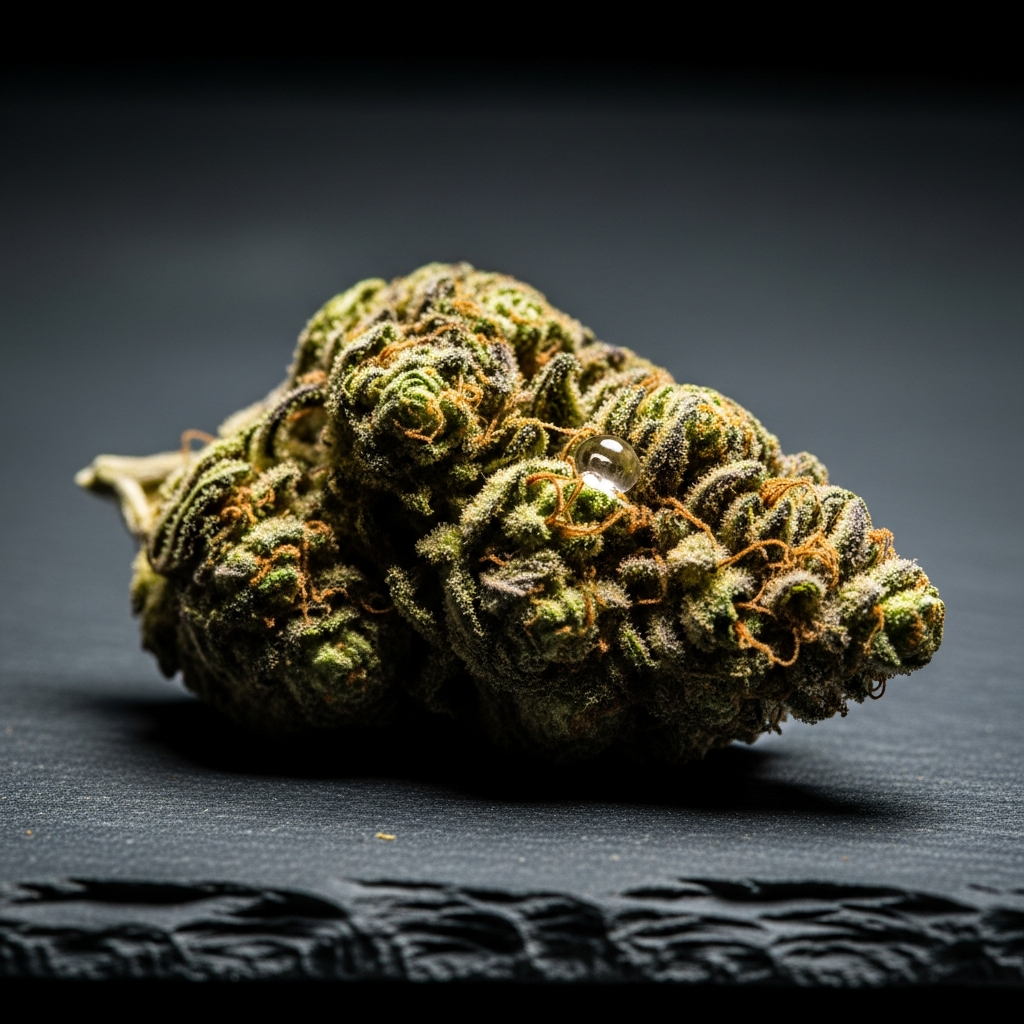
THC vs. CBD: What's the Difference, Really?
If THC and CBD were siblings, they'd be the loud one and the quiet one. They come from the same plant, are structurally almost identical at the molecular level, and yet do dramatically different things once they're in your body. Understanding the difference — and especially how they work together in combination products — is probably the single most useful piece of cannabis literacy a new shopper can pick up. This guide walks through what each does, where the evidence is strong vs. tentative, and how to read THC:CBD ratios on a label.
The molecular punchline
THC (delta-9-tetrahydrocannabinol) and CBD (cannabidiol) are both cannabinoids — naturally occurring compounds the cannabis plant produces. They have almost identical molecular formulas (C₂₁H₃₀O₂), but a single bond is arranged differently between them. That tiny structural difference is the entire reason one is intoxicating and the other isn't.
Both molecules interact with the human endocannabinoid system (ECS) — a regulatory network we all have that helps modulate mood, pain, appetite, sleep, immunity, and stress response. THC binds directly and strongly to one of the ECS's primary receptors (CB1, concentrated in the brain). CBD doesn't bind much to CB1 at all — it works more indirectly, modulating other systems and even tamping down some of THC's effects.
What THC does
- Intoxicating ('high'): produces the euphoric, mind-altering experience cannabis is famous for.
- Appetite increase: the classic 'munchies' effect.
- Pain modulation: well-documented in research as reducing perception of pain, especially neuropathic pain.
- Sleep onset: indica-leaning, high-THC products often shorten time-to-sleep.
- Anxiety — both ways: low doses can reduce anxiety; high doses (often 10mg+ for new users) can trigger it.
- Short-term memory impairment: while intoxicated. Resolves within hours.
- Mild cardiovascular effects: elevated heart rate during peak intoxication.
What CBD does
- Non-intoxicating: you do not get 'high' from CBD alone, no matter the dose.
- Inflammation reduction: the most consistent research finding, across many tissue types.
- Anxiety reduction: supported by multiple controlled trials, especially for situational anxiety.
- Seizure reduction: the FDA has approved one CBD-based prescription drug (Epidiolex) for specific epilepsy syndromes — the strongest CBD evidence base.
- Sleep quality: modest improvements in falling asleep and reducing nighttime waking in some studies.
- Counter-balances THC anxiety: when consumed in combination, CBD softens THC's edge — see ratios, below.
How they work together (the entourage effect)
When you take both THC and CBD at the same time, they don't just add up — they interact. Research has consistently shown that adding CBD to a THC dose:
- Reduces THC-triggered anxiety (very useful for new or low-tolerance users).
- Makes the 'high' feel softer and clearer (less foggy, more functional).
- Slightly extends the duration of the experience.
- May increase pain relief beyond what THC alone provides for certain pain types.
This combined-effect-greater-than-the-sum is sometimes called "the entourage effect." It's the reason many wellness-leaning consumers prefer THC:CBD blends (like 1:1 or 2:1) over THC-only products — the experience is more controlled.
Decoding the ratios on a label
Combination products are usually labeled as a THC:CBD ratio. The first number is THC; the second is CBD. Here's what each common ratio actually feels like, based on what our customers report at the counter:
| Ratio (THC:CBD) | What it's for | Typical example dose |
|---|---|---|
| 1:0 (THC only) | Maximum intoxication, classic 'high' | 5–10 mg edible |
| 2:1 | Functional high with a softer edge | 5 mg THC + 2.5 mg CBD |
| 1:1 | Balanced — wellness with mild euphoria | 2.5 mg THC + 2.5 mg CBD |
| 1:2 to 1:4 | Subtle lift, primarily wellness-leaning | 2 mg THC + 4–8 mg CBD |
| 1:20 or higher | Effectively non-intoxicating CBD product | 1 mg THC + 20 mg CBD |
| 0:1 (CBD only) | No intoxication, wellness use | 10–25 mg CBD |
Which one is right for what you want?
- Want to be functional and calm during the day? Try a 1:1 or 1:2 tincture or low-dose edible.
- Want classic recreational effects? Stick with primarily-THC flower, vape, or edibles.
- Have anxiety with THC? Add CBD to balance it — a 1:1 ratio or a CBD-forward tincture.
- Want help sleeping? THC alone usually works faster, but a 2:1 indica-leaning product is gentler.
- Want chronic pain support without intoxication? CBD-only or 1:20 products.
- Want recovery support post-workout? CBD topical or 1:1 tincture is the most common ask.
What CBD won't do (managing expectations)
Despite the marketing, CBD is not a cure-all. Independent reviewers (including Project CBD and Harvard's medical reporting) consistently note that:
- Doses matter: most studies showing benefits used 25 mg+ per dose. Most gummies you find at gas stations have 5–10 mg, which may be sub-therapeutic.
- Quality varies wildly: stick to NY OCM-licensed dispensary products with a printed lab COA. Many non-licensed CBD products contain less CBD than the label claims.
- Onset is real but modest: consistent daily use over 2–4 weeks shows benefits more reliably than "I took one last night." Treat CBD like a wellness supplement, not a painkiller.
Drug testing — important warning
Standard drug tests look for THC metabolites, not CBD. So pure CBD does not show up on a test. However: most dispensary CBD products contain trace amounts of THC (typically under 0.3%), and heavy daily use of even a low-THC CBD product can occasionally trigger a positive screen. If your job tests, ask your budtender specifically for a 'THC-free' or 'broad-spectrum' CBD product — and even then, no product is 100% guaranteed test-safe.
Common questions about cannabinoids 101.
- Will CBD get me high?
- No. CBD by itself is not intoxicating at any dose available in legal products. It may make you feel relaxed or less anxious, but it doesn't produce the euphoria or perceptual changes associated with THC.
- Is CBD legal in New York?
- Yes. Hemp-derived CBD (under 0.3% THC) is legal under federal law and broadly available in NY. Cannabis-derived CBD (often with slightly more THC) is sold at adult-use and medical dispensaries.
- Can I take CBD and THC at the same time?
- Yes, and many wellness-leaning consumers prefer this. Combining the two often produces a softer, more functional experience than THC alone. Look for 1:1, 2:1, or 1:2 ratio products.
- Does CBD show up on a drug test?
- Pure CBD doesn't show up — drug tests look for THC, not CBD. However, most CBD products contain trace THC, and very heavy daily CBD use has occasionally caused positive tests. If you're tested for work, ask specifically for a broad-spectrum or THC-free product.
- What does '1:1' actually mean on the package?
- It means the product contains equal milligrams of THC and CBD. A 10mg 1:1 gummy has 5mg THC and 5mg CBD. The first number is THC, the second is CBD.
- Is CBD or THC better for anxiety?
- CBD is generally safer for anxiety — it doesn't carry the risk of triggering more anxiety the way high-dose THC sometimes does. A 1:1 or CBD-forward ratio is often the best of both worlds.
- How long does CBD take to work?
- Onset depends on format: tinctures held under the tongue work in 15–30 min, edibles 45–90 min, topicals are localized and take 20–40 min for surface effect. For chronic-issue use, consistent daily dosing for 2–4 weeks shows the clearest benefits.
What we cited.
This guide draws on independent, peer-reviewed, and government-published sources. Cannabis is a fast-moving field — we update articles as new evidence emerges. For medical questions, always consult a licensed clinician.
- 1.Cannabis (Marijuana) DrugFacts — National Institute on Drug Abuse (NIDA/NIH)
- 2.FDA and Cannabis: Research and Drug Approval Process — U.S. Food and Drug Administration
- 3.CBD: A Patient's Guide to Medicinal Cannabis — Project CBD
- 4.Taming THC: potential cannabis synergy and phytocannabinoid-terpenoid entourage effects — British Journal of Pharmacology (Russo, 2011)
Related guides.
Last updated · May 2026 · For adults 21+ · Educational content, not medical advice